
From Warehouse to Wilderness: Can Simulation Replace On-Wing Training of Hoist Operators?
While simulators are frequently used training tools in aviation, the same cannot be said for helicopter hoist operations. That might be about to change.
Tekst & photo: Marianne Wennesland. Published: 18.05.2026
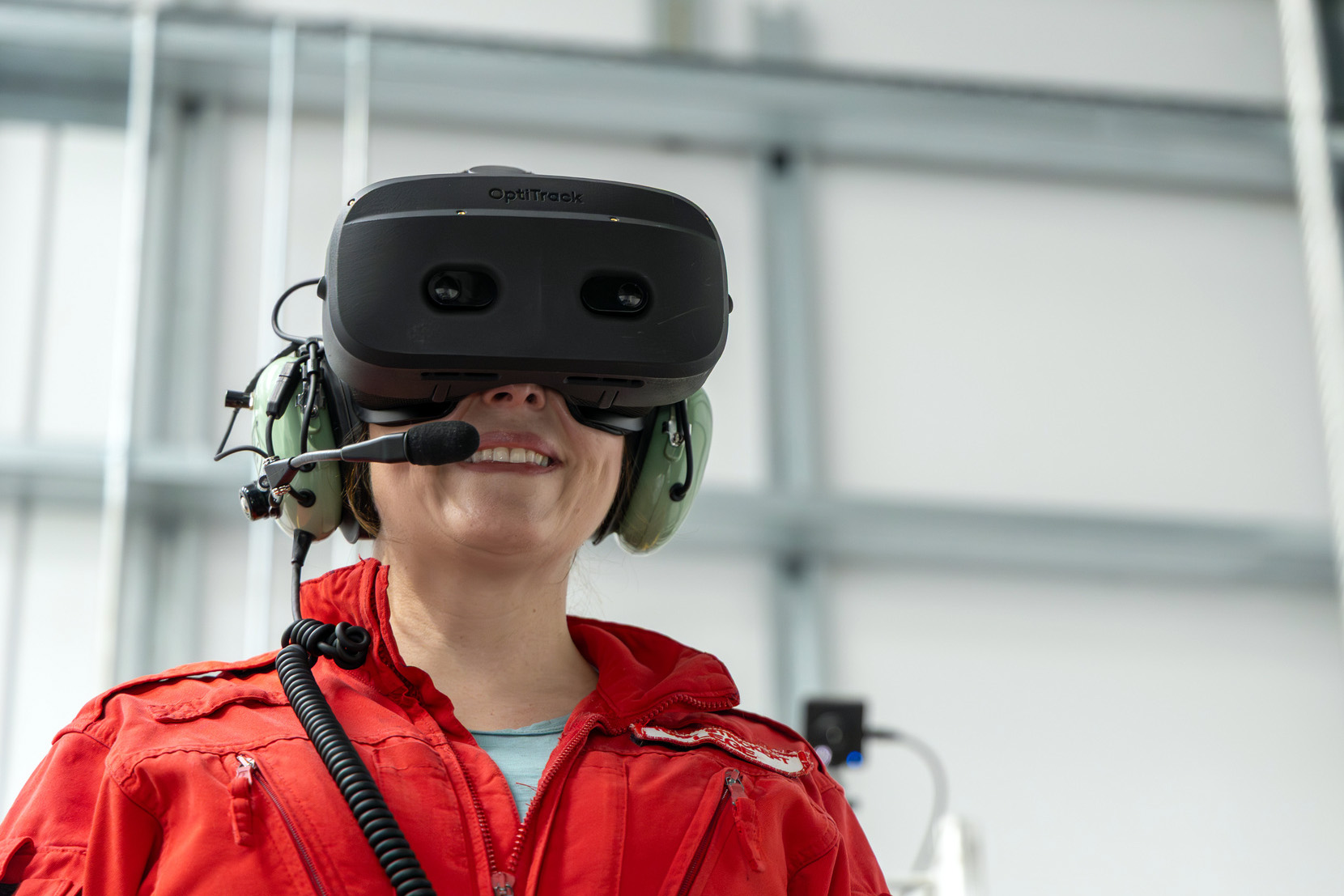
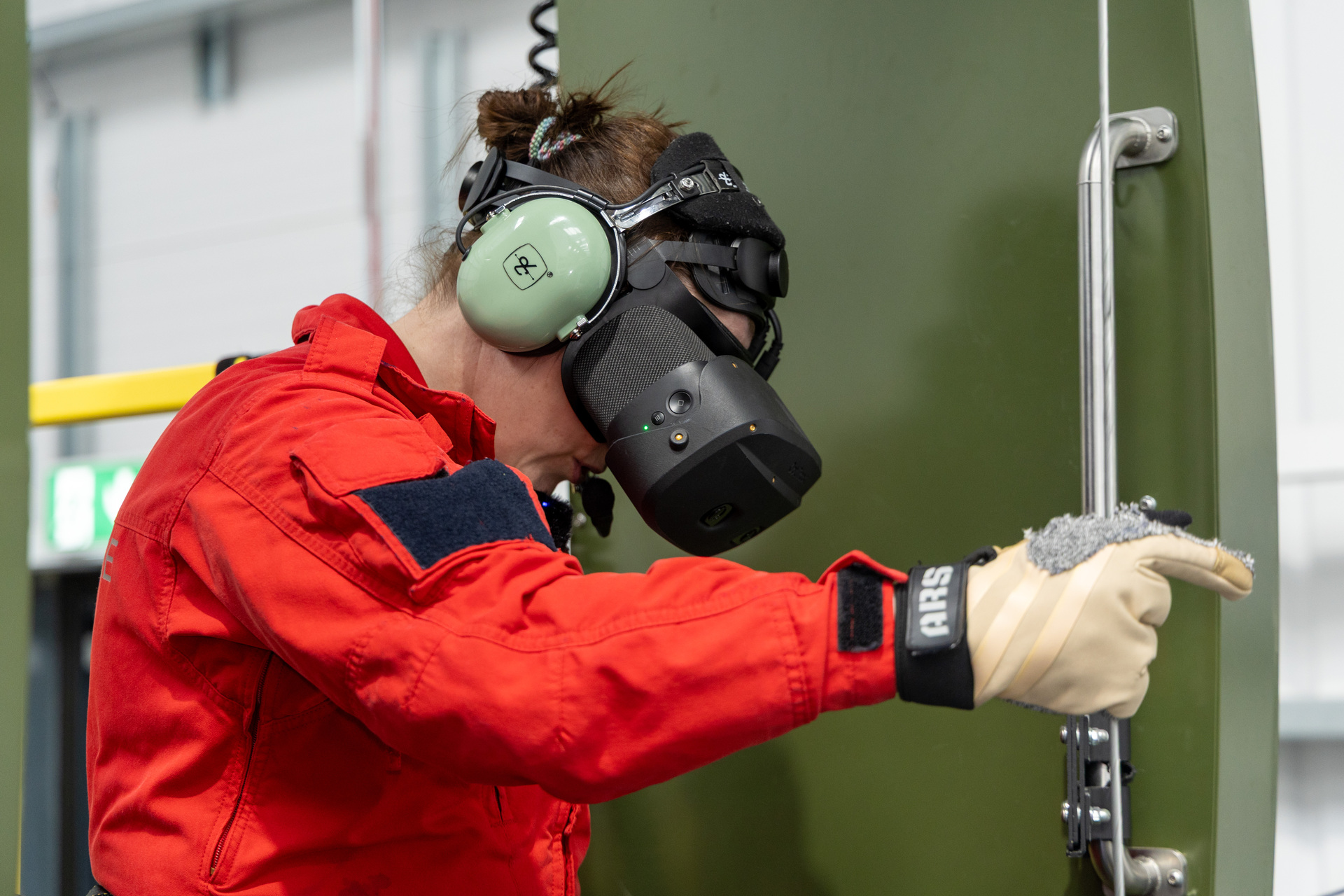
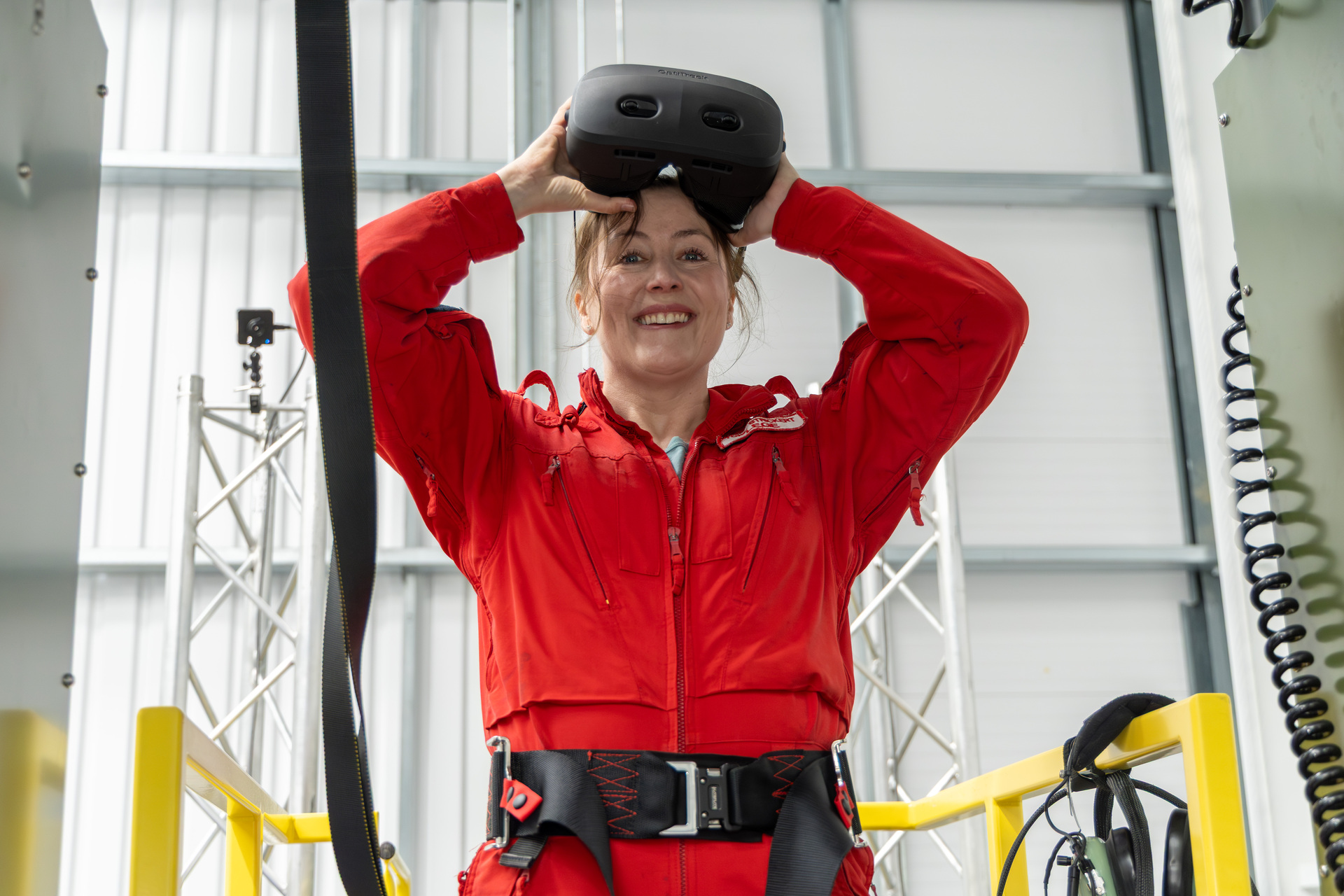
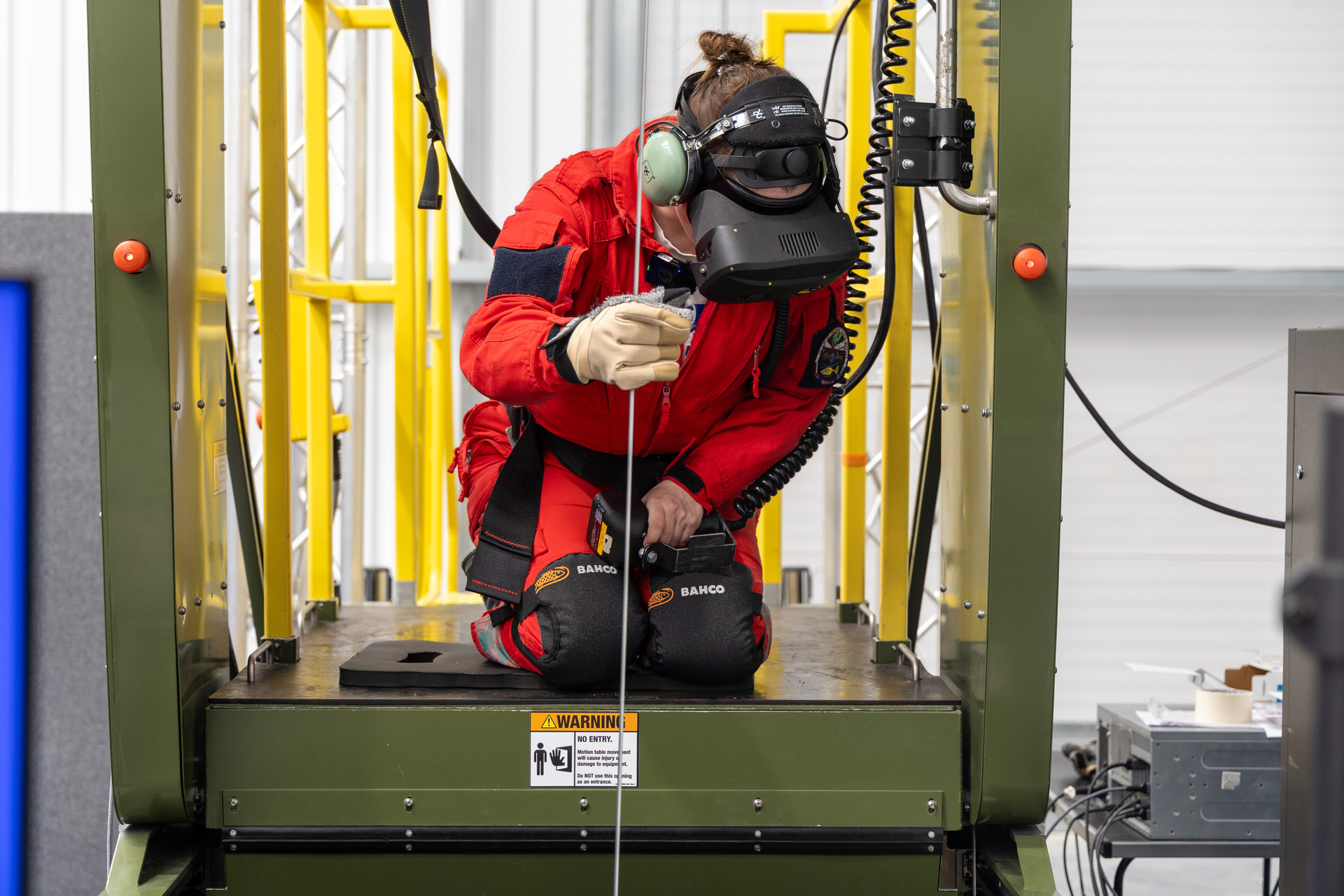
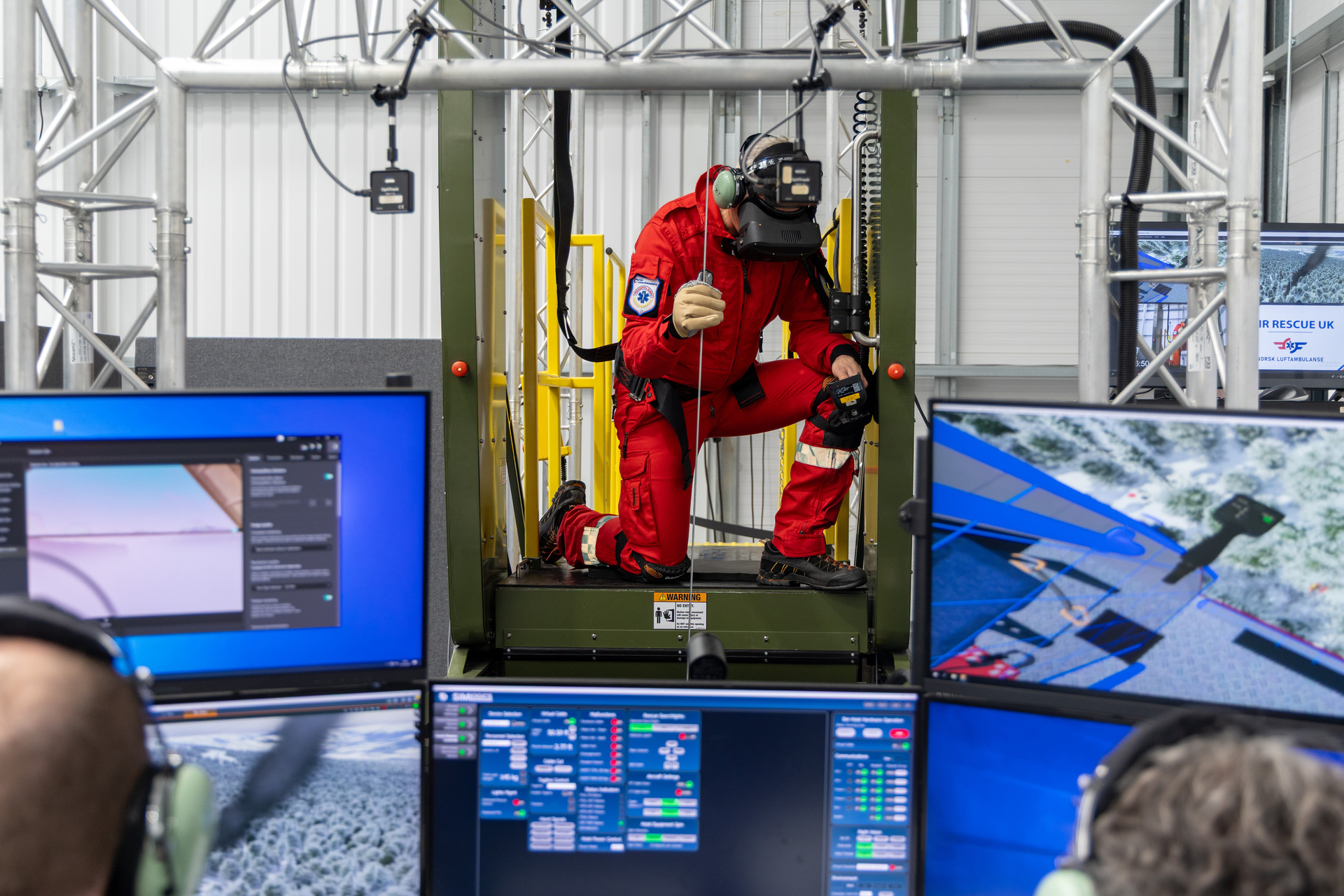
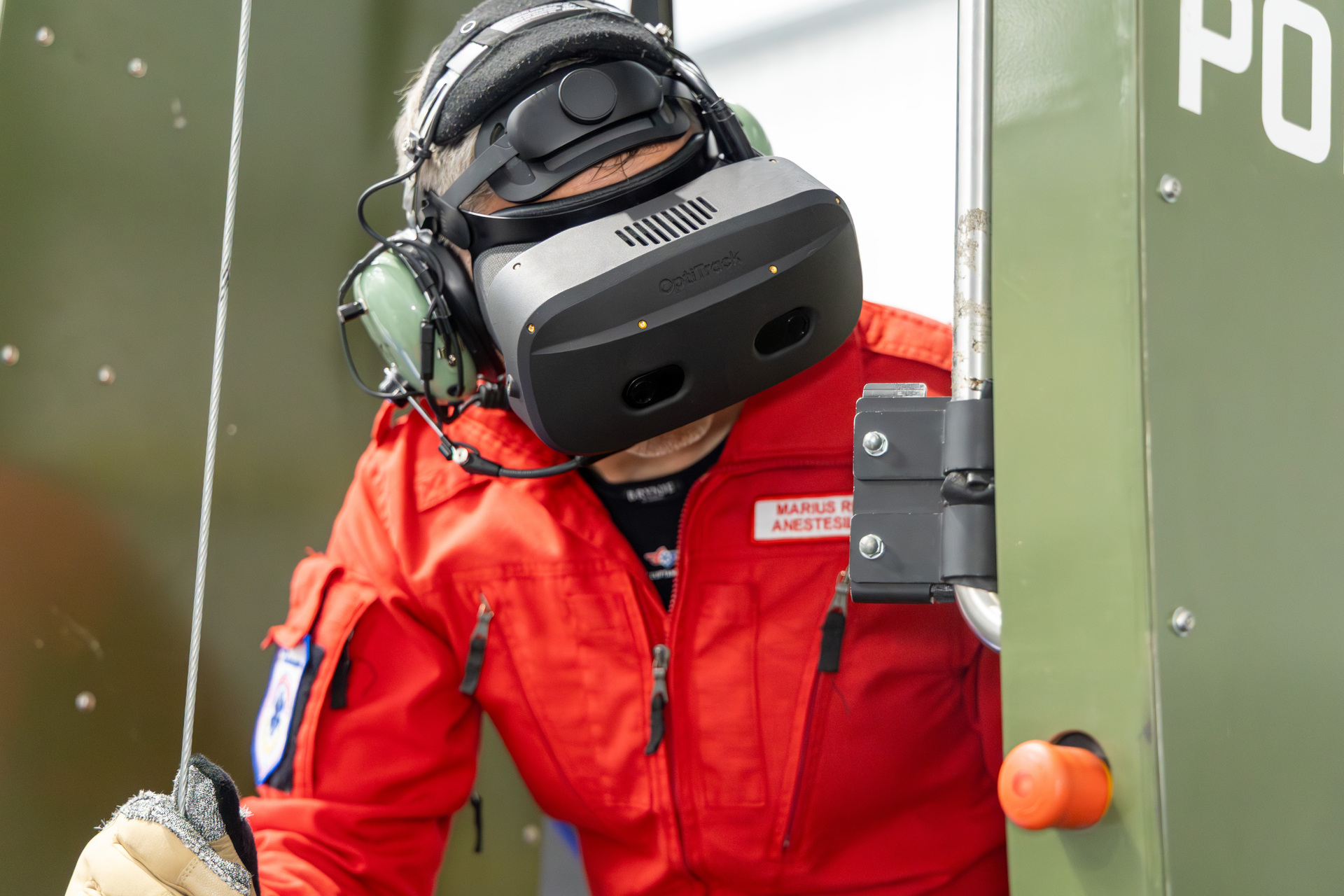
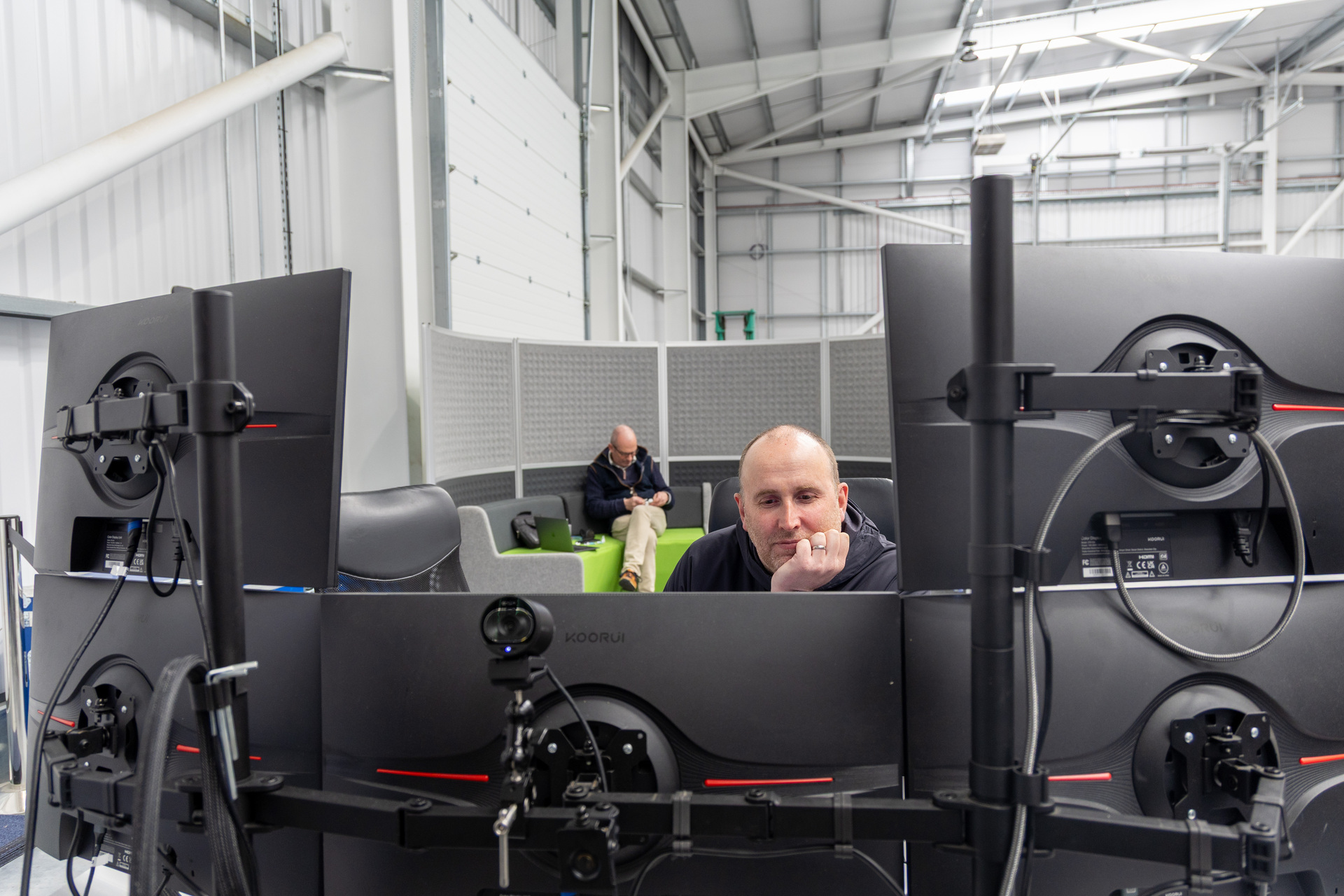
In the corner of a warehouse in Harwich, England, a HEMS physician peers intently into her VR goggles. Her glove-clad hand steers a wire moving downwards, seemingly into nothing, alternatively into a machine.
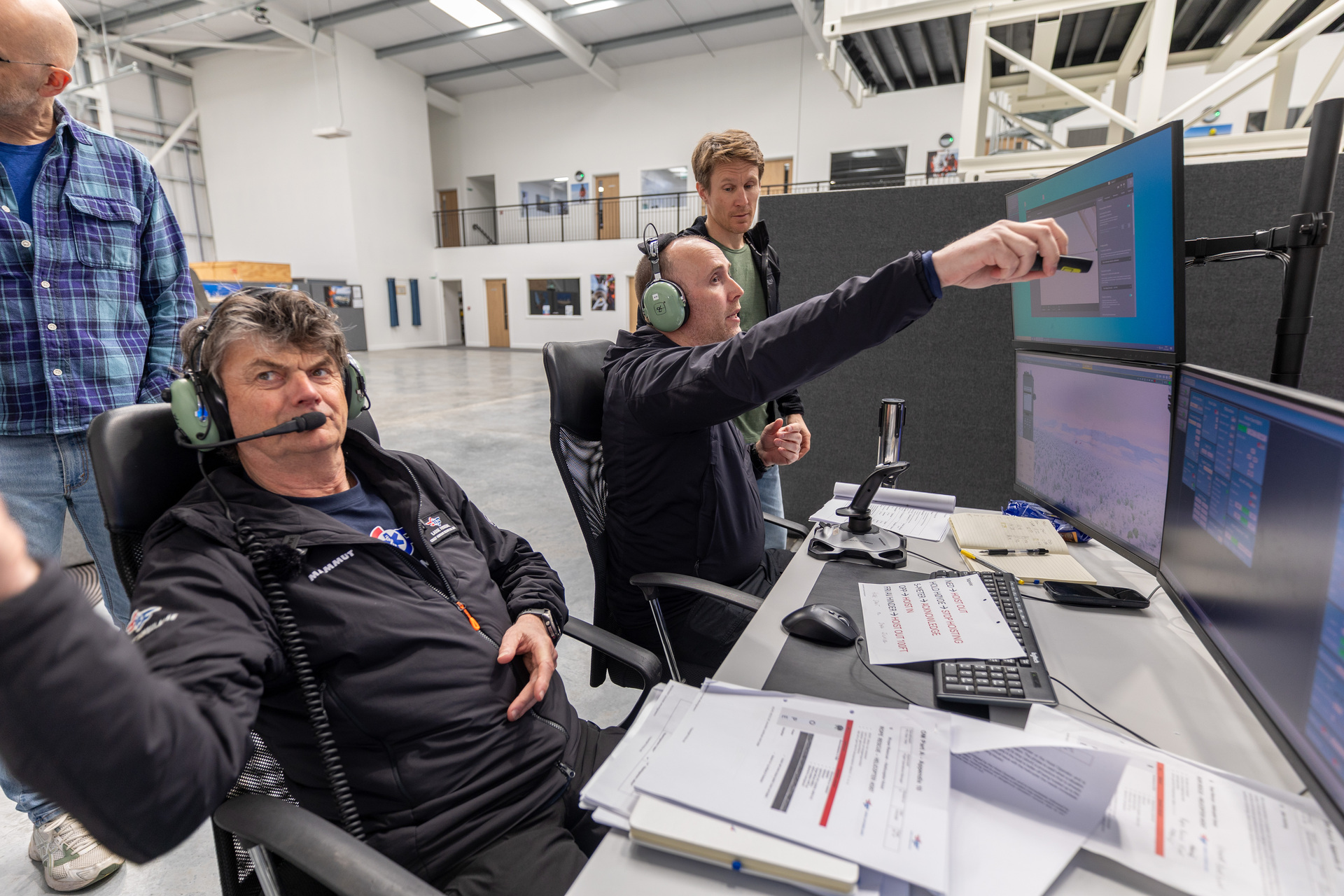
Communication runs frequently between her and a couple of colleagues behind a nearby desk filled with screens. They show a helicopter in motion and what she sees: a HEMS Crew Member being lowered into a dense forest toward a patient lying on the ground.
Cutting Time, Costs, and Emissions
Simulators are frequently used training tools in aviation, but the same cannot be said for hosting operations – a common patient retrieval method in helicopter search and rescue:
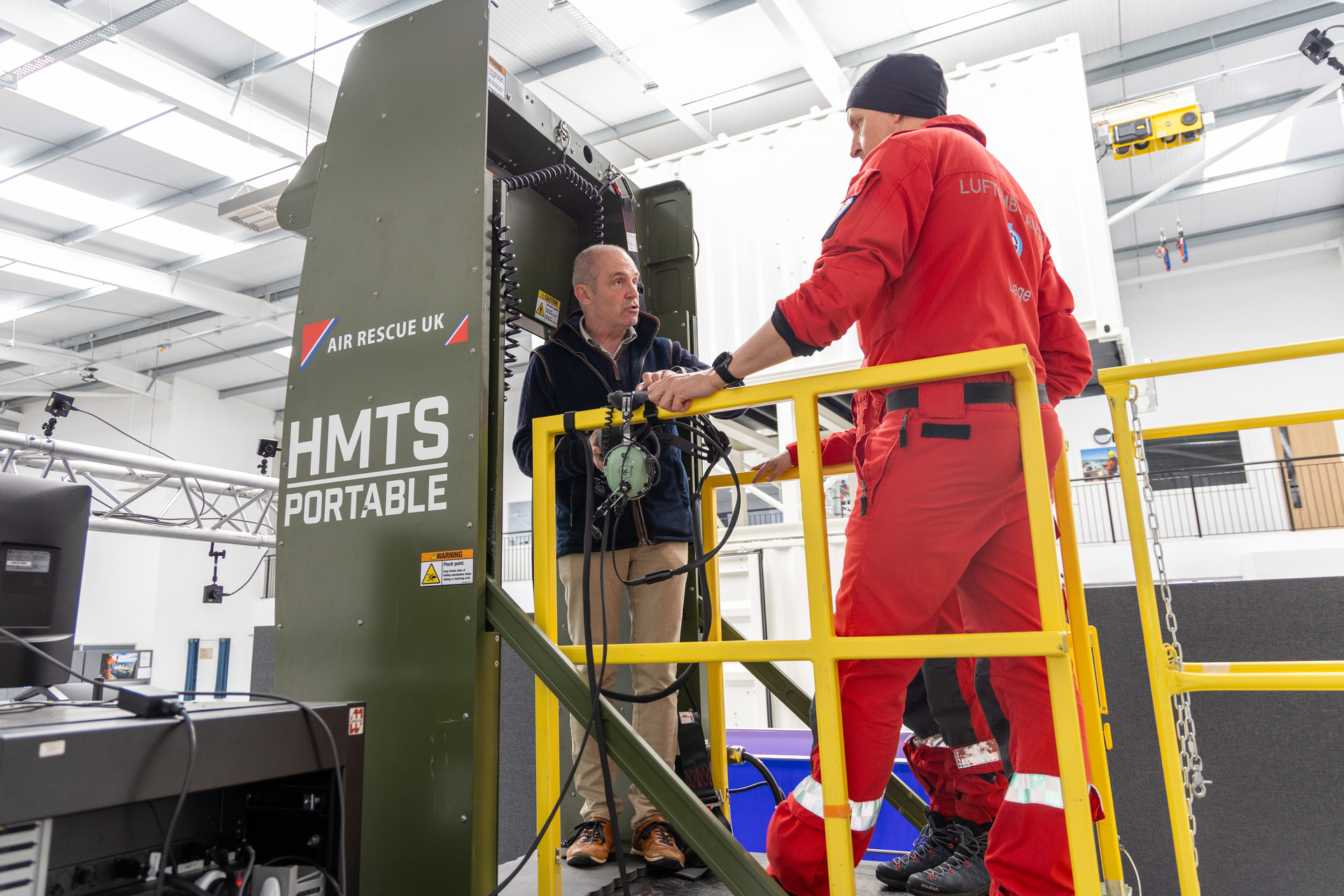
– Today’s hoist operators undergo their training in the air. We’re here to find out to what extent simulator training can replace on-wing training to save time, costs and the environment, says Researcher and HEMS Crew Member Thomas Nordgaard Dahle.
The trial is part of the Norwegian Air Ambulance Foundation’s research on patient evacuation from challenging terrain, including which method is best suited for the Norwegian Helicopter Emergency Medical Services (HEMS): its current practice of static-rope evacuation or hoisting.
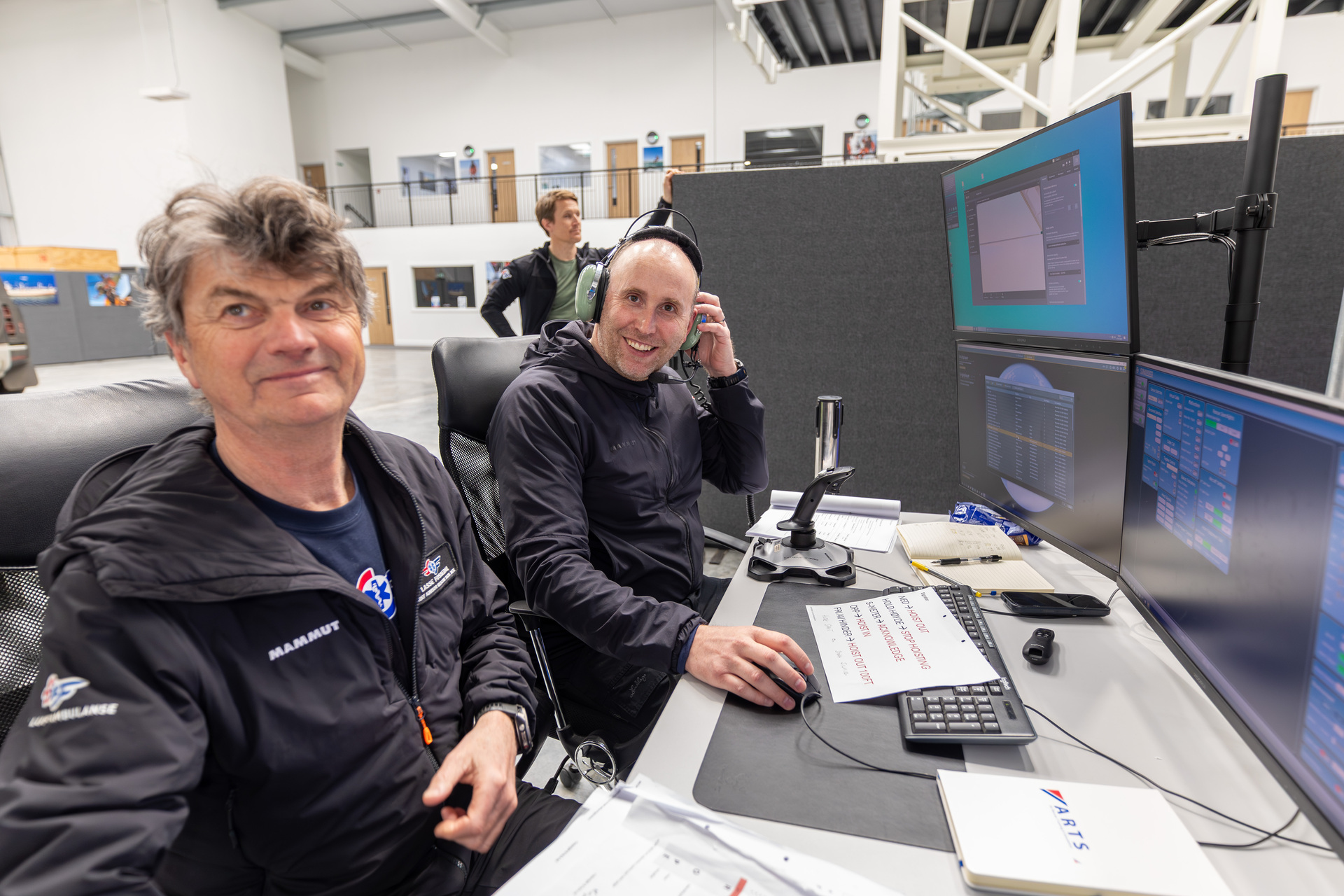
– We want to find out to what extent simulator training can replace on-wing training to save time, costs and the environment, says Thomas Nordgaard Dahle (right).
– Surprisingly Realistic!
Eight Norwegian HEMS Physicians try their hand at static and dynamic hoisting in Air Rescue UK’s simulator. In addition to learning maneuvers and related communication, they practice avoiding mishaps, including the spinning of the hoisted HEMS Crew Member and patient.
– In the simulator, they operate in terrains familiar to Norwegian HEMS operations – from forested areas to gorges and mountains. They start their training as hoist operators and learn to handle the HEMS Crew Member and patient under various conditions, says Nordgaard Dahle.
Ulf Ouchterlony, participating HEMS Physician, describes the simulator training as surprisingly realistic:
– Well, not necessarily the graphics – what we’re seeing is obviously computer-generated – but you really get into it! I moved around like I was in the helicopter and even caught myself pushing buttons that weren’t there, he says.
A Modest, but Important Ambition
The hypothesis of Nordgaard Dahle and his team is that 50 percent of the hoist operator training could be conducted in a simulator rather than in the helicopter. Compared to Air Rescue UK’s experience, that’s a conservative estimate:
– For the last three years, we’ve been training hoist operators for all-weather search and rescue, the oil and gas sector, and wind turbines. Over that period, we’ve been able to replace 70-80 percent of their flying time with simulation time, says David Bazlinton, Air Rescue UK’s Head of Training.
Regardless of the numbers, documenting that any share of the training can be simulated would be an improvement: Most helicopter operators currently use helicopters for it all.
– To our knowledge, this is the first research on simulating parts of the training. If it proves effective, it benefits all helicopter operators that conduct hoist operations – in Norway and internationally, says Nordgaard Dahle.
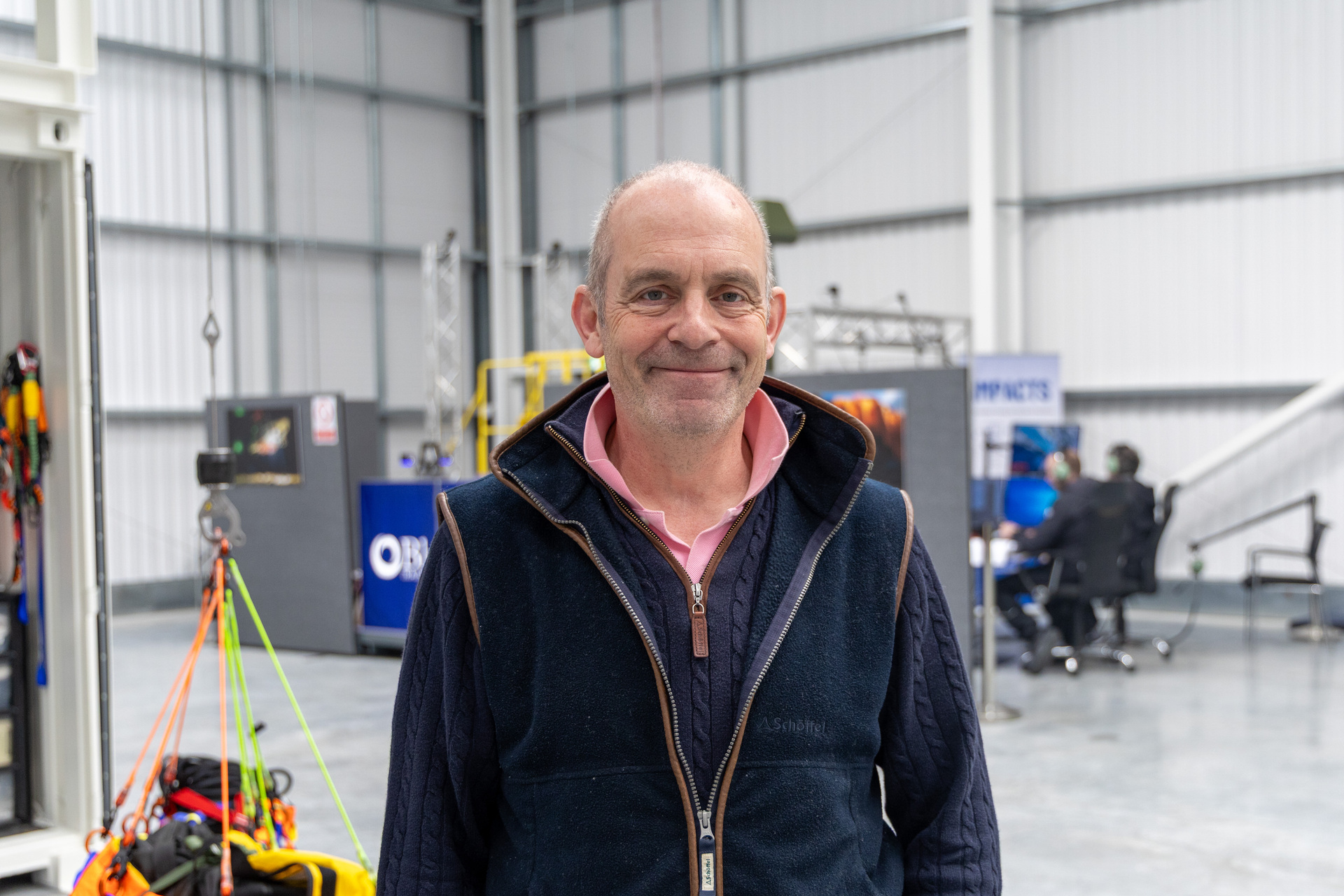
– We’ve been able to replace 70-80 percent of their flying time with simulation time, says David Bazlinton about the training of hoist operators at Air Rescue UK.
Ready for Reality
In addition to saving time, costs and the environment, the simulator allows room for error, which makes learning safe and constructive, according to participating HEMS Physician Toril Strickert:
– It holds great value to be able to practice unforeseen events and emergency procedures in a simulator, for example, engine failure or a malfunctioning hoist – procedures paramount to know in case of emergency, she says.
Strickert further says that simulator training allows the upcoming helicopter training to focus on what cannot be simulated. Colleague Ouchterlony feels prepared for the next step and is happy about the development from having no pre-existing hoisting skills:
– I feel I’ve made quite a few leaps during the simulator training, and I am now able to hoist both the HEMS Crew Member and the patient. I know that’s in virtual reality, but I now feel ready for reality!
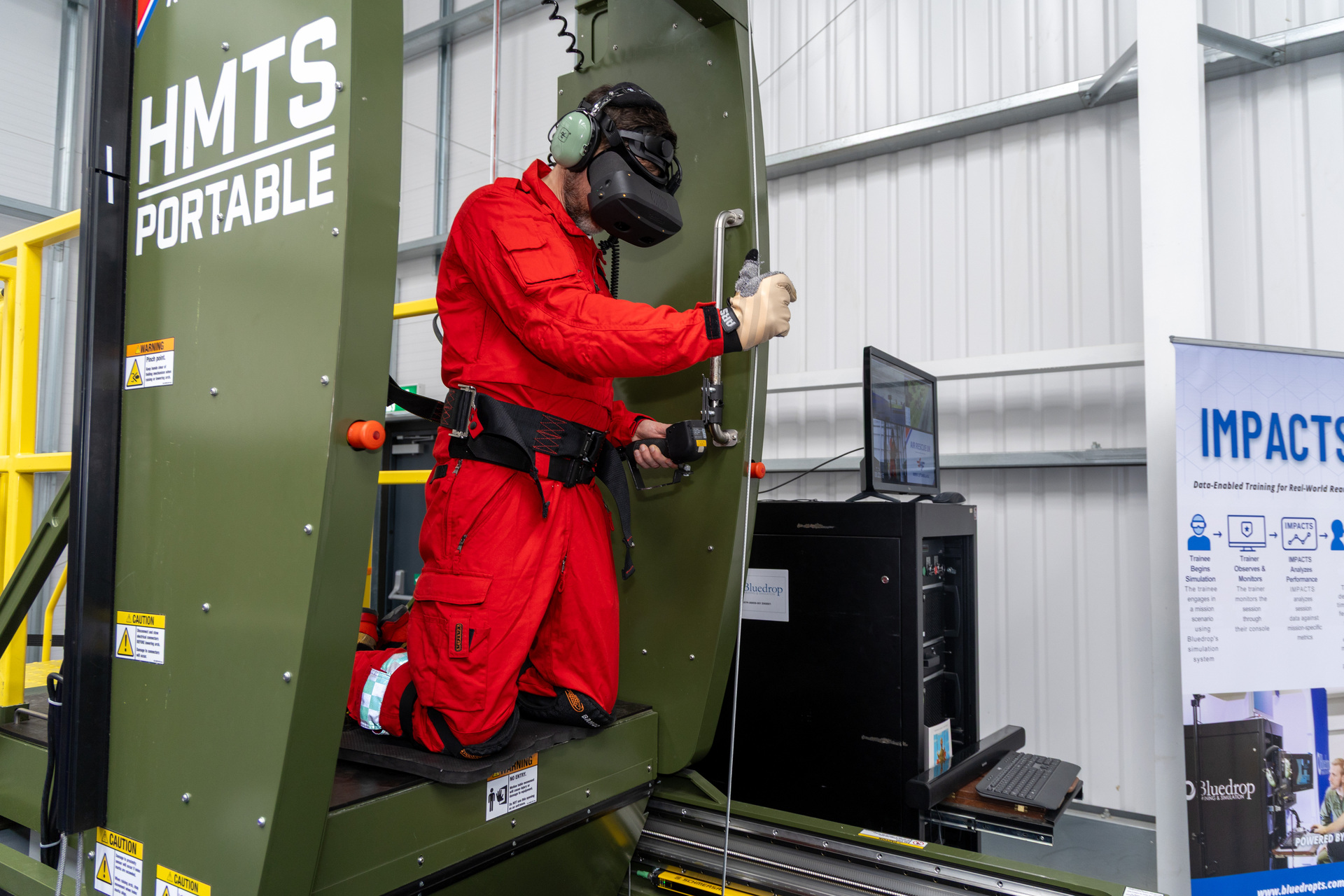
– I know that’s in virtual reality, but I now feel ready for reality! Says Ulf Ouchterlony.