Our 50+ researchers constitute Europe’s largest research hub on prehospital critical care. With backgrounds as physicians, HEMS crew members, paramedics, and other relevant specialties, they delve into a wide range of challenges and potential solutions to improve care for critically ill and injured patients.
The Norwegian Air Ambulance Foundation runs five research clusters in close collaboration with university hospitals, universities, and other relevant collaborative partners:
- Advanced Interventions, Oslo
- The Prehospital Acute Brain Cluster, Oslo
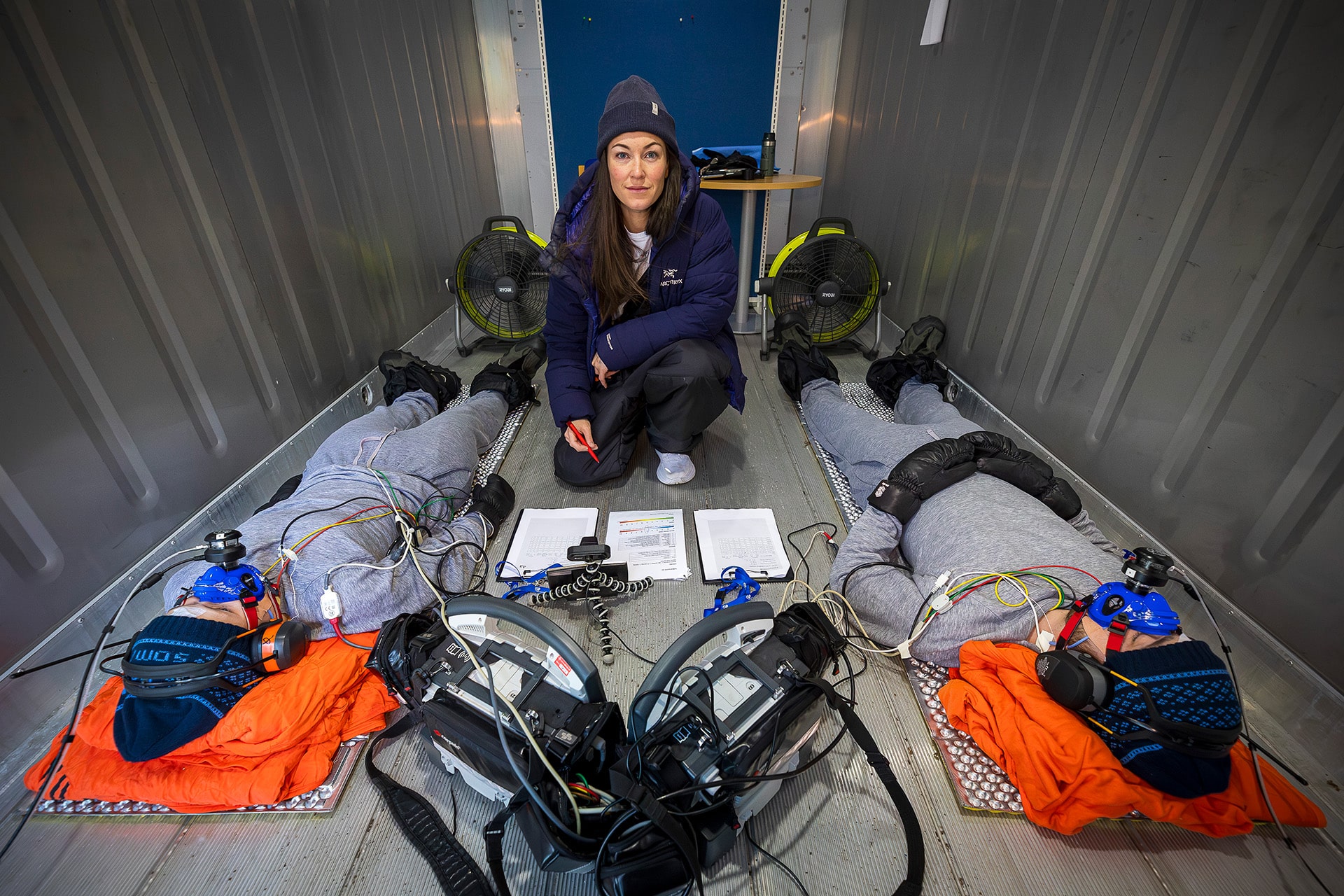
- Mountain Medicine, Bergen
- Advanced Prehospital Diagnostics and Assessment Competence, Stavanger
- Data capture, Trondheim
Amongst projects in our portfolio that have gained international interest are:
Access to Patients
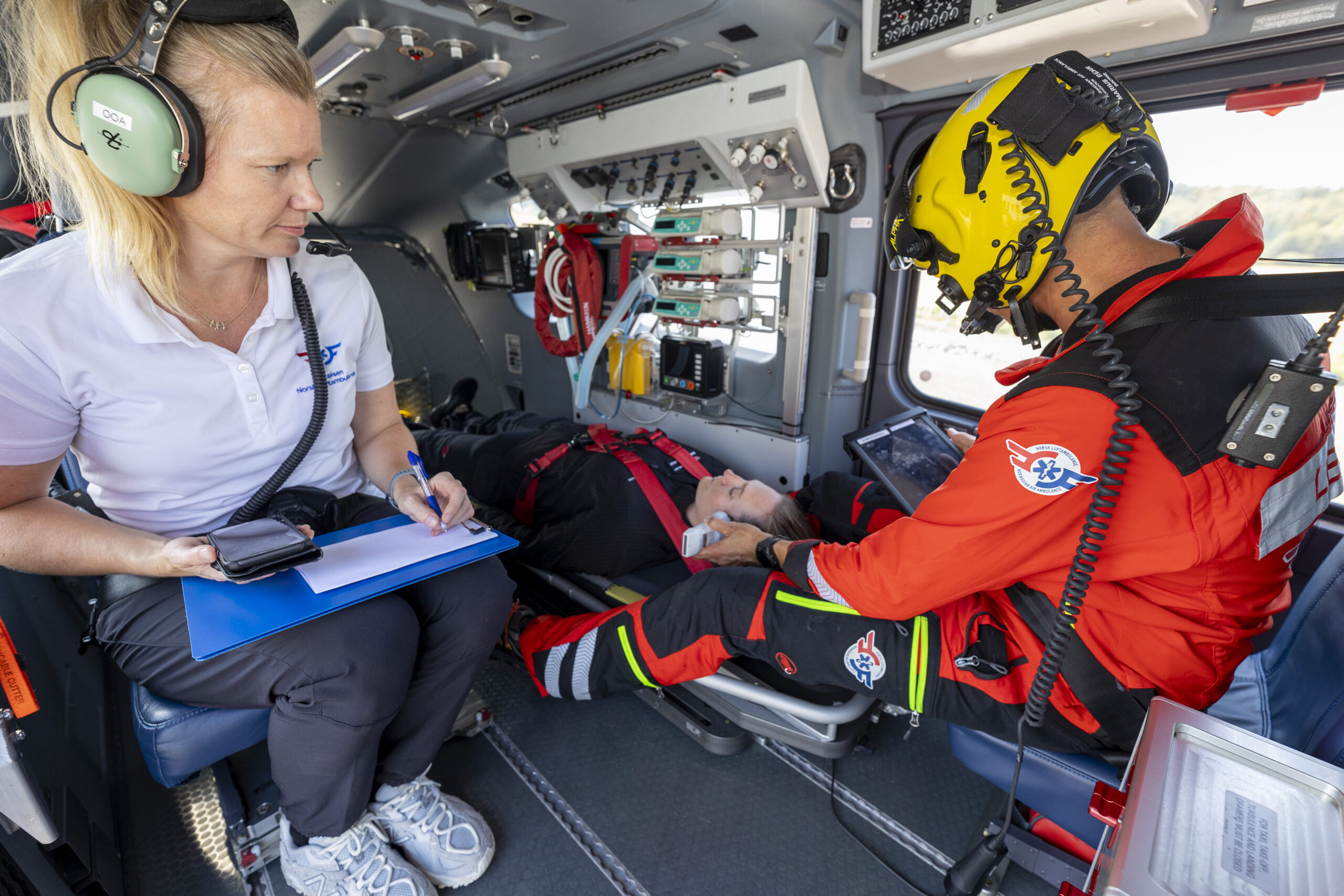
Two of our PhD candidates are experienced HEMS crew members using our R&D helicopter for trial runs and data collection. Their comparative research examines hoisting versus static-rope evacuation to identify the safest and most efficient method for rescuing patients from challenging terrain.
Brain Stroke
Every day, 30-40 people in Norway suffer brain strokes that may claim their lives or change them beyond recognition. The first hour after onset is the golden hour for treatment, and some treatment is only possible for the first four. Only half of brain stroke patients make it to a hospital in time.
The Norwegian Air Ambulance Foundation is committed to bridging the gaps in brain stroke detection and treatment. Projects in our related research and innovation range from gender differences in symptoms to early diagnostics and treatment via biomarkers and mobile stroke units. To increase stroke detection at the first point of contact with health services, we have also researched the effects of training and a stroke-detection app on ambulance personnel and EMS operators.
Cardiac Arrest
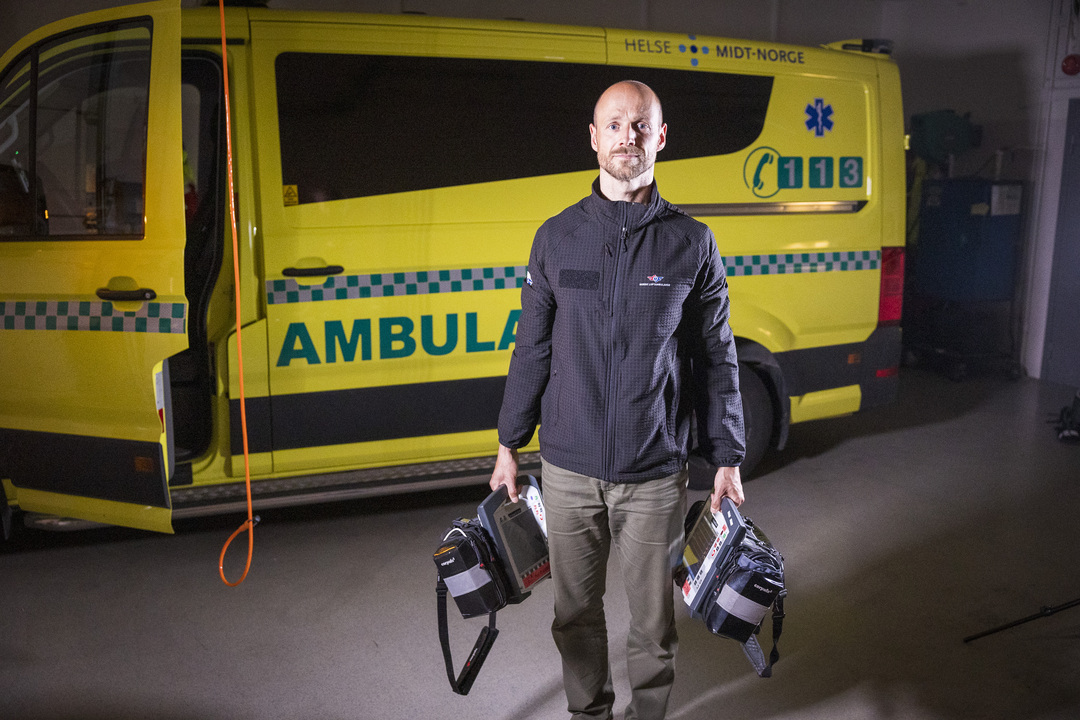
Less than 10 per cent of cardiac arrests occur in a hospital, according to European figures. This battle is fought prehospitally, and several of our researchers are directly involved: Our Dual Defibrillator study assesses the advantages and disadvantages of using two defibrillators in out-of-hospital cardiac arrests. The goal is to determine whether dual defibrillation can restart the heart more quickly, improve survival chances, and reduce long-term damage. REBOA Arrest focuses on increasing the likelihood of resuscitative endovascular balloon occlusion of the aorta: inserting and inflating a tiny balloon in the aorta of cardiac arrest patients to concentrate blood flow to the heart
Early Pain Management by Non-Physicians
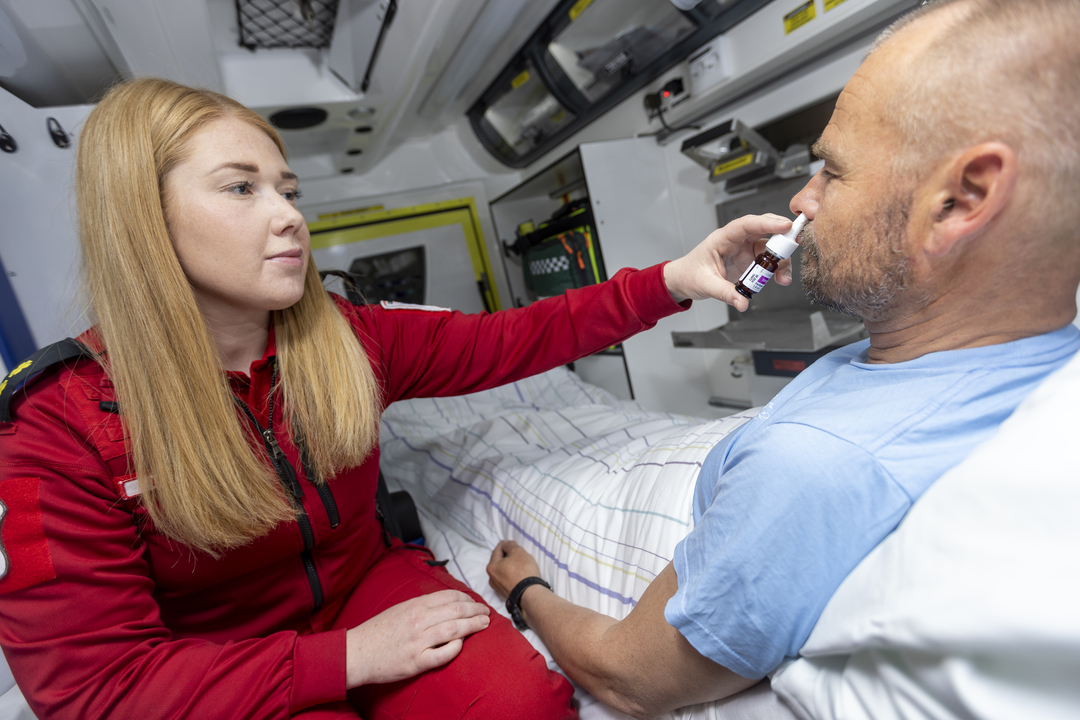
Our Premefen study examines acute pain management without intravenous access. This may secure earlier initiation and more efficient treatment when ambulance personnel are first on scene, and during challenging conditions.